
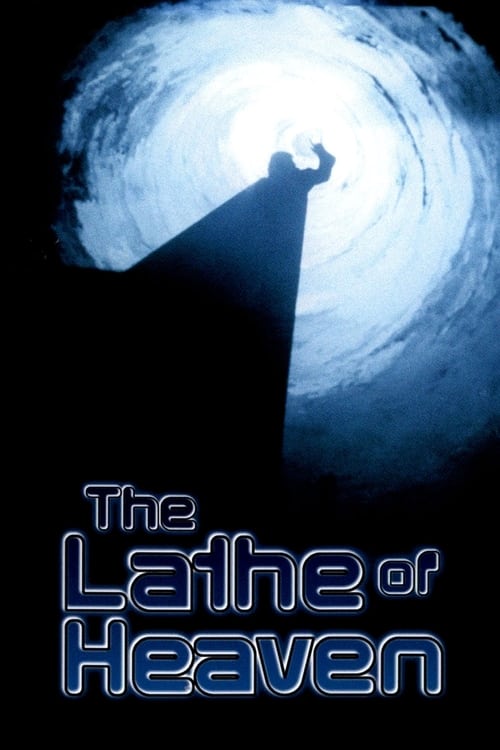
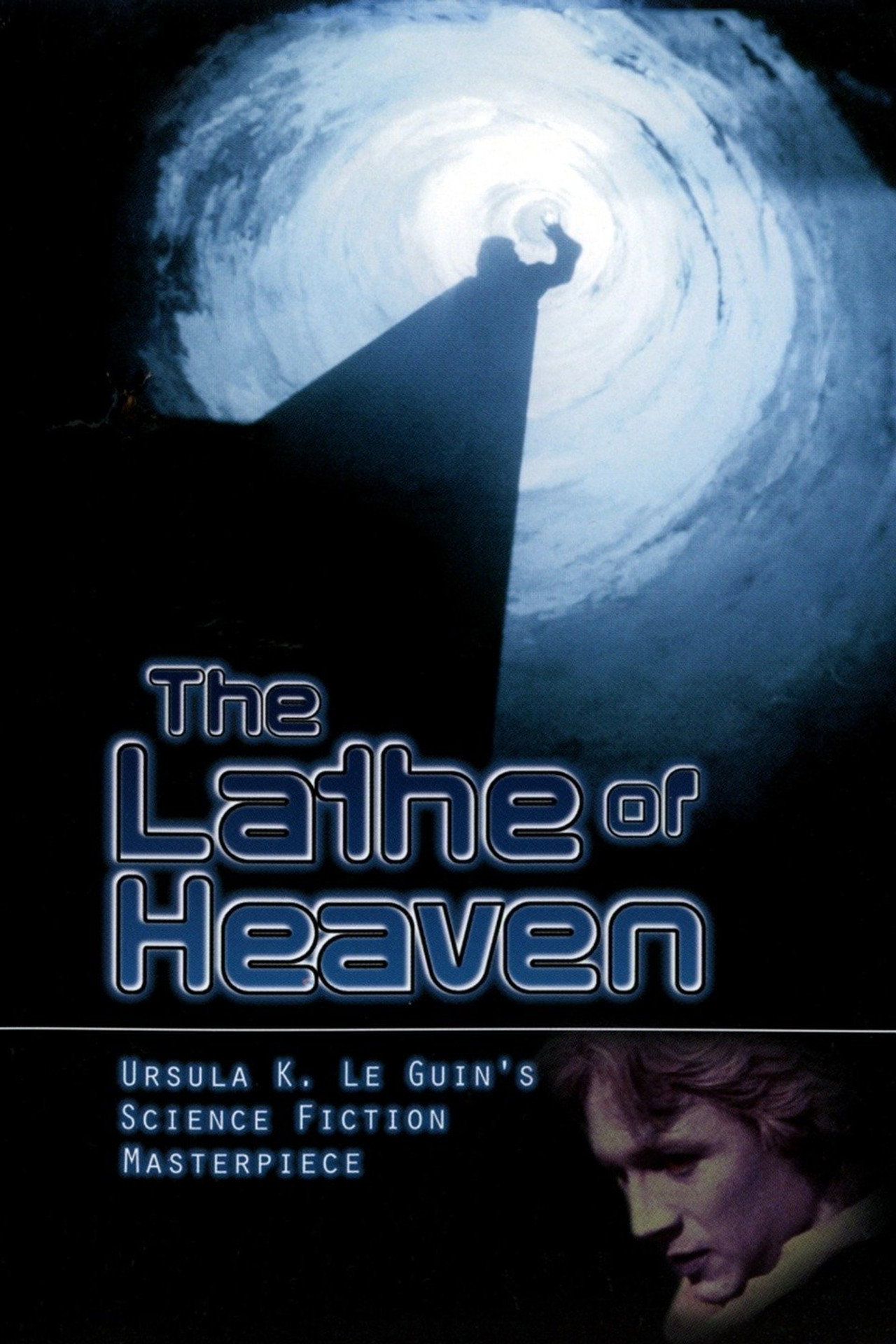
About the film
- Directed by
- Fred Barzyk, David R. Loxton
- Released
- January 9, 1980
- Country
- United States of America
- Starring
- Bruce Davison, Peyton E. Park, Niki Flacks, Kevin Conway, Vandi Clark
More credits
- Language
- English
- Origin
- US
- Studios
- Thirteen, Taurus Film, PBS
- Written by
- Roger Swaybill, Diane English, Ursula K. Le Guin
- Produced by
- Fred Barzyk, David R. Loxton
- Cinematography
- Robbie Greenberg
- Music
- Michael Small
- Also starring
- Bernedette Whitehead, Jo Livingston, Jane Roberts, Tom Matts, Frank Miller
For more than a decade, the most requested program in American public television history was one almost no one could see. Its broadcast rights had lapsed, and it survived only on fading tapes people had recorded off their own televisions.
The problem was a song. The film used the Beatles' "With a Little Help from My Friends" as a turning point in its plot, and clearing it had become ruinously expensive, especially after Michael Jackson bought the Beatles catalog. So THE LATHE OF HEAVEN (1980), the first movie PBS ever produced, sat locked away.
When fans finally forced a rebroadcast in 2000, a worse surprise was waiting. PBS had not kept the original. The only way to bring it back was to rebuild it from a single surviving broadcast tape, with a cover version standing in for the Beatles. A film about a man who dreams things out of existence had itself nearly been dreamed out of existence.
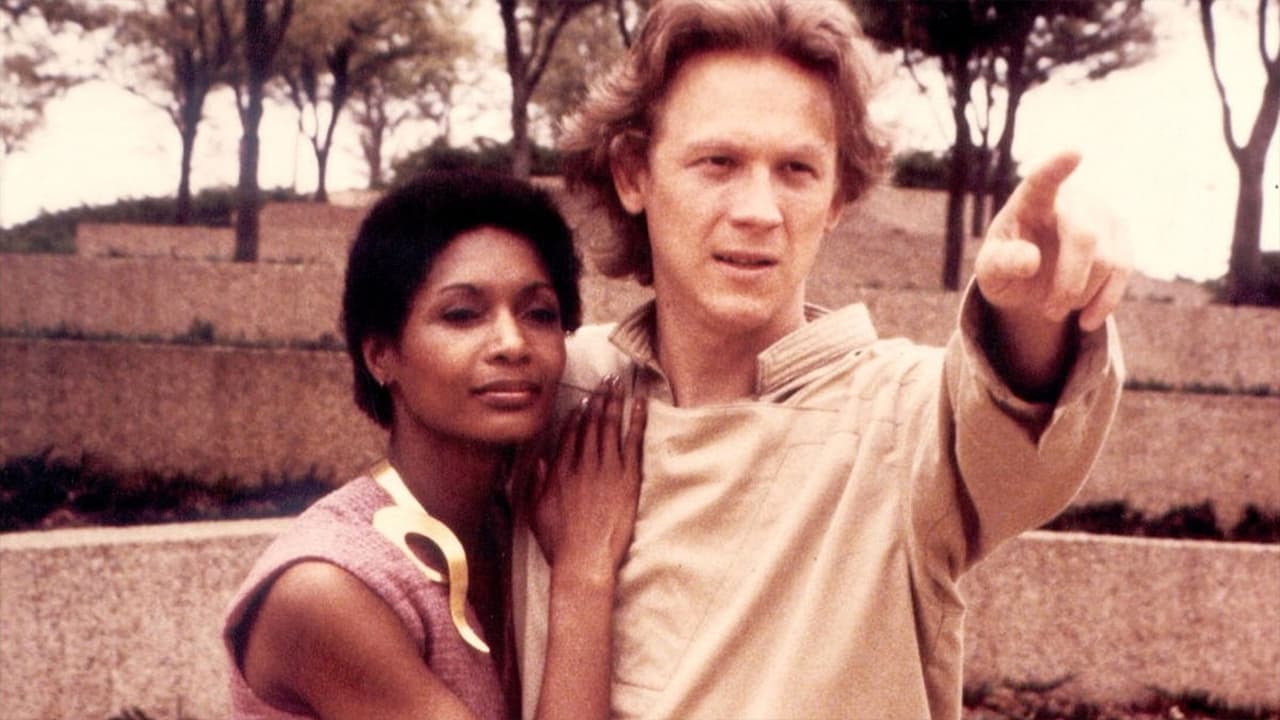
That man is George Orr, whose dreams rewrite reality while only he remembers the world that was. His psychiatrist learns the power is real and starts steering those dreams to repair the world, and every fix detonates. Cure overpopulation, and a plague has already killed billions. Dream up peace on Earth, and aliens invade to unite us against them.
Ursula K. Le Guin called it the only one of her books she ever enjoyed imagining as a film.
---
Additional detail from Terry Dugas:
The film was produced by Taurus Film in association with WNET in New York. The Corporation for Public Broadcasting provided some funding, administered through PBS. While PBS was the distributor of the program, the masters were in control of WNET. When distribution rights expired in 1988, the masters were probably erased and the tape reused. This was a common industry practice. Since the production was shot on video tape and not film, no film masters exist.
How to see The Lathe of Heaven (1980)
Streaming
United States
No subscription, rental, or purchase options listed in United States right now.
Source: JustWatch
Physical media
More editions
Movies they don’t want you to see
Related movies only streaming in other territories
 Ben 10: Race Against Time (2008)Streaming in United Kingdom · Germany · Japan · Australia +52 more
 Ben 10: Alien Swarm (2009)Streaming in United Kingdom · Germany · Australia · Italy +51 more
 Rage of Stars (2026)Streaming in France · Spain · Brazil · Mexico +11 more
 The Watcher in the Woods (1980)Streaming in Brazil
Movies we wrote about
 1 commentCreator (1985)
 6 commentsLongtime Companion (1989)
 17 commentsLiquid Sky (1982)
 1 commentNothing Lasts Forever (1984)
 11 commentsNinja III: The Domination (1984)
 1 commentThe Apple (1980)
Films scored for your taste
We have to talk…
 Godzilla Minus Zero (2026)Not quite as good as the first, but the best monster mash Godzilla movie for sure.
 Capturing Bigfoot (2026)Honestly one of the best documentaries I've seen. That sounds like hyperbole, but it was a…
 Trouble Every Day (2001)TROUBLE EVERY DAY is definitely an outlier in its graphic extremity, but saying Denis was known…
 The Social Reckoning (2026)A little preachy and sanctimonious - maybe. But I wonder if that's just the climate we're…
 Doppelgänger (1969)One of the best!
 Death Race 2000 (1975)Saw this first run at a local drive-in and loved it. Still do. Still love the…
 Man Bites Dog (1992)Rented this vhs in college a couple times. Hilarious and a good way to practice your…
 Pandora's Box (1929)Great movie! 🌻
 The Devil Rides Out (1968)Brilliant movie!!! "The Goat of Mendes! The Devil Himself!"
 Three Colors: Red (1994)I can’t believe it came out 32 years ago! The wonderful, talented cinematographer Piotr Sobociński also…
 Moontrap (1989)Worth the watch
 Velvet Goldmine (1998)Mark Sebastian Jordan Bowie also produced all of Transformer.

LeGuin’s love letter to PKD
I never realized how lucky I was to watch this in 1980. I still remember he dreamt an end to racism by making everyone grey.
Is this available to watch anywhere. Apparently justwatch says not available anywhere
One of my “best buys” in any media is that movie on DVD at the price of a used DVD (back when they weren’t given away) because it’s one of my all-time favorite sci-fi movies.
Saw it when it first aired have the DVD.
This has haunted me for years. Such a great movie.
Saw it when it first aired as well way back when. Absolutely awesome movie/adaptation. Have it now on my Jellyfin server and introduced my wife to it about a year ago. She too found it awesome.
Brilliant film/story, though the look of it today is a little rough for jaded viewers.
Loved the book AND the movie!!!!
Antwerp! Dream the aliens off the moon! Oops…
I dislike most of the Le Guin I’ve read, but the novel this is based on is one of my all-time favorites. I own both adaptations and love them both, but the first is better.
saw this at a convention in Australia soon after it came out and thought it compared well with the book – forgot there was a Beatles song in it.
It was shot in 16mm.
Wow i remember watching this back then!
A wonderful imaginative adventure
“Antwerp”
I was fortunate enough to see it. Great stuff!
It’s streaming on YouTube. This is the original. The SyFy channel did a remake, but I prefer this one.
https://youtu.be/M8VRbaVNvSA?is=KCI2Q3JMCgaszzP8
I have it on DVD.
See this when it first aired, and recently saw it on YouTube. Still holds up pretty well.
Saw it when it first ran. I was in high school. I’m sorry. I hated it. I could not follow it. Things kept changing even after he supposedly lost the ability to have “effective dreams”.
I had an Audio Visual class in high school 1983 and we had a 3/4” tape version of this that we would set up and play for a class. It had the original song and it still haunts me.
I think they added some delay and reverb to the song which makes it that much more memorable.
It’s common knowledge what happened to the “A Little Help-.” That’s what happened to tv shows with copyrighted music like “Wiseguy.” The arc in the music industry? Fuhgeddaboudit!
You can find it on internetarchive
One of the greatest television events of all time.
Never forgot how beautiful that use of the Beatles song was…
“The Lathe of Heaven” had little in visual effects, but told a powerful story.
I read the book, then I saw this version of the movie. Didn’t like the Lisa Bonet version. Great story.
It seems crazy that music can be monetized for so long.
Add Phantom of the Open Hearth and (Jean) Shepards Pie to that list of lost nuggets.
AI slop!
I saw this once, decades ago. It was great, and the revelation of reality near the end was great! I’d love to see it again.
It is worth finding, and it is definitely worth watching despite the seemingly degradative quality
Love this movie and remake isn’t too bad…
I remember being blown away by it when it first aired, then wondering what had happened to it, as it was never shown again or released on home video. Finally got the DVD when that came along and saw it with new eyes. It the interim, I had discovered Philip K. DIck. THe book and movie are full of references to him and his writings and the overall story was LeGuin’s homage to him.
PKD fans may also enjoy “Man Facing Southeast” (just don’t get the dubbed version). It was more or less stolen and served as the basis for “K-Pax”, but the original is extremely thought-provoking and worthy of more than one watch.
So just remake it.🤷🏻♂️
The best rendition
watched it when it was first aired , later found and read the book, both are excellent
It’s excellent
I saw that with my mom when it was originally broadcast… I’ve got a version of it in my Plex but I’m not sure where I got it from. Sometimes Torrent sites have versions of it, Fanedits and other versions. Someone took a 35mm version of The Keep and posted it, it’s not available elsewhere…
It’s streaming for free on Tubi. Their print looked good. I saw the original broadcast and it seemed to be photographed in a soft, almost muddy way.
The erasing and re-using of tapes between the 60’s-80’s was an awful thing. So many shows were lost. The most famous example of a show being SAVED from erasure was “Monty Python’s Flying Circus”. The BBC was going to erase – *forever* – the ENTIRE 4 seasons of the series. Terry Jones heard, by mere chance, from a friend, that the BBC was literally about to do it THAT DAY – and he rushed over to the BBC and saved “Flying Circus” barely in time by arguing with the studio. Jones is pretty much responsible for “Circus” surviving. At the time, in the 70’s and early 80’s, even, still, the idea that broadcast TV shows could be put onto cassette tapes and sold commercially, was still just not something being done, at least on a mass scale. Most TV was just considered disposable, apart from re-runs and wasn’t thought of as art to preserve, even culturally. Honestly, it’s kind of a miracle that the early “Doctor Who” series survived mostly intact.
Adam Stevenson Yes, and it did nothing to dissuade conspiracy theorists when they learned many of the Apollo mission tapes had been reused as well.
Loved it. George Orr – JorJor.
I had no problem buying the DVD.