
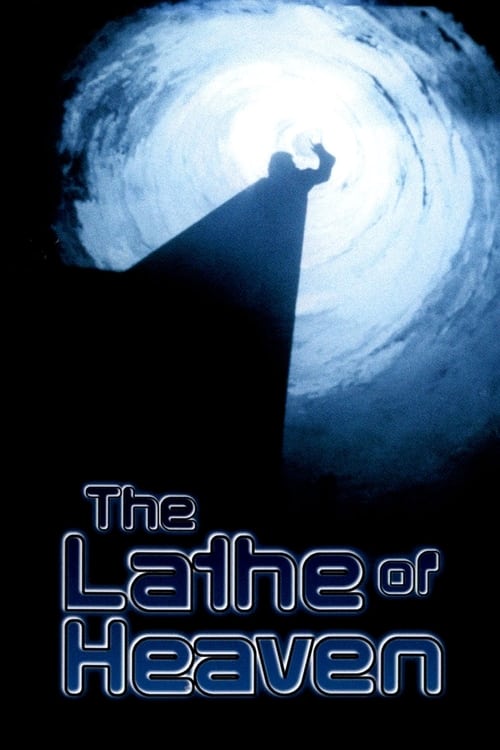
The Lathe of Heaven (1980)
Saved on this device. to keep it.
Where to watch
No US streaming, rental, or purchase options listed right now.
Source: JustWatch
For more than a decade, the most requested program in American public television history was one almost no one could see. Its broadcast rights had lapsed, and it survived only on fading tapes people had recorded off their own televisions.
The problem was a song. The film used the Beatles' "With a Little Help from My Friends" as a turning point in its plot, and clearing it had become ruinously expensive, especially after Michael Jackson bought the Beatles catalog. So THE LATHE OF HEAVEN (1980), the first movie PBS ever produced, sat locked away.
When fans finally forced a rebroadcast in 2000, a worse surprise was waiting. PBS had not kept the original. The only way to bring it back was to rebuild it from a single surviving broadcast tape, with a cover version standing in for the Beatles. A film about a man who dreams things out of existence had itself nearly been dreamed out of existence.
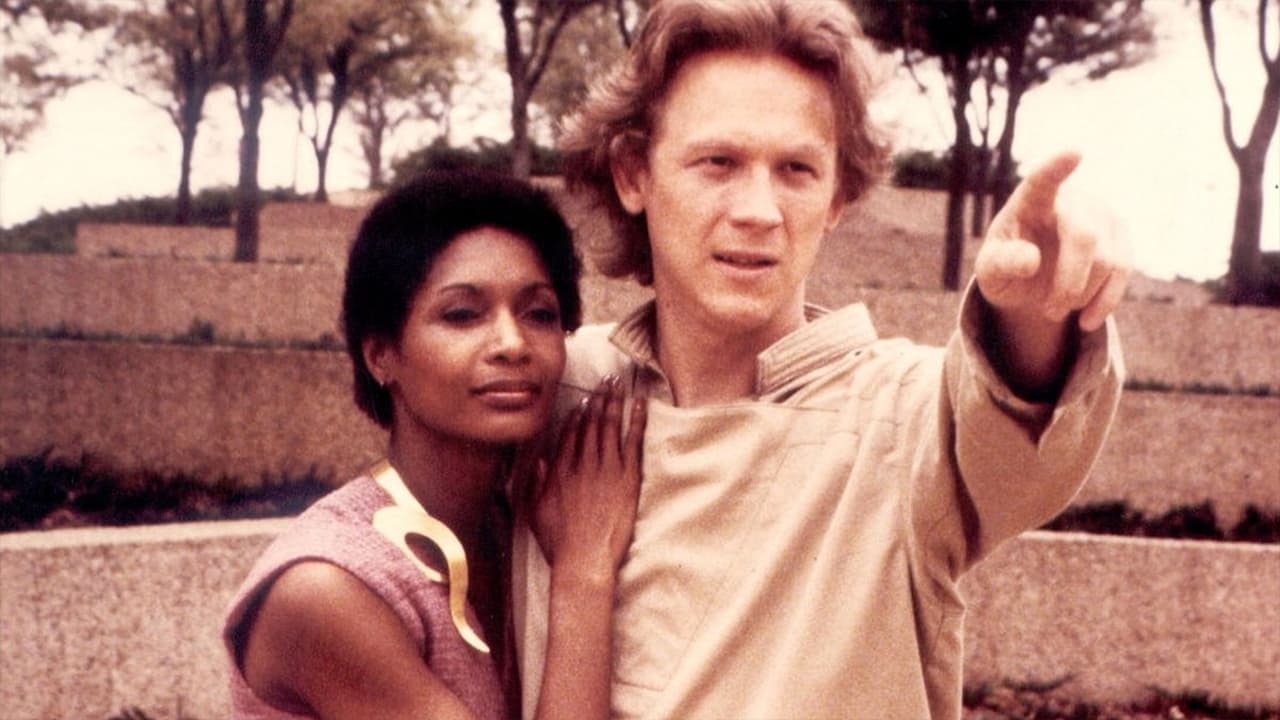
That man is George Orr, whose dreams rewrite reality while only he remembers the world that was. His psychiatrist learns the power is real and starts steering those dreams to repair the world, and every fix detonates. Cure overpopulation, and a plague has already killed billions. Dream up peace on Earth, and aliens invade to unite us against them.
Ursula K. Le Guin called it the only one of her books she ever enjoyed imagining as a film.
---
Additional detail from Terry Dugas:
The film was produced by Taurus Film in association with WNET in New York. The Corporation for Public Broadcasting provided some funding, administered through PBS. While PBS was the distributor of the program, the masters were in control of WNET. When distribution rights expired in 1988, the masters were probably erased and the tape reused. This was a common industry practice. Since the production was shot on video tape and not film, no film masters exist.
Physical media
DVDNew Video GroupUnited StatesRegion 12000UPC 0767685946732
DVDUnited StatesRegion 12000
VHSUnited States2000
About the film
Ursula K. Le Guin's Science Fiction Masterpiece
- Directed by
- Fred Barzyk, David R. Loxton
- Runtime
- 104 minutes
- Released
- January 9, 1980
- Country
- United States of America
- Starring
- Bruce Davison, Peyton E. Park, Niki Flacks, Kevin Conway, Vandi Clark
More credits
- Genres
- Science Fiction, Fantasy, Drama, Thriller, TV Movie
- Language
- English
- Origin
- US
- Studios
- Thirteen, Taurus Film, PBS
- Written by
- Roger Swaybill, Diane English, Ursula K. Le Guin
- Produced by
- Fred Barzyk, David R. Loxton
- Cinematography
- Robbie Greenberg
- Music
- Michael Small
- Also starring
- Bernedette Whitehead, Jo Livingston, Jane Roberts, Tom Matts, Frank Miller
 This product uses the TMDB API but is not endorsed or certified by TMDB.

Saw this film when it first aired.
Really interesting.
Definitely worth watching.
https://www.youtube.com/results?search_query=The+Lathe+Of+Heaven
I’ve never forgotten this film. I saw it when it first aired, also, and it just stayed with me. I had always wondered why it was never shown again, and you can bet I caught the 2000 re-broadcast when it happened. Really interesting and thought provoking story.
Roy Stanton I saw it when it first aired, too, and like you, it stayed with me as well. 
One of Le Guin’s best.
I found it on DVD years ago. It’s still just as haunting and unforgettable as ever. The cover version of the song is disappointing but it’s a minor thing.
Isn’t this basically the story arc/theme of the upcoming Tom Cruise film?
This was remade as TV movie in 2002 with James Caan and Lisa Bonet, which is also difficult to find. Not nearly as good as the 1980 version, but still an interesting watch: https://www.imdb.com/title/tt0290230/
Goddamn it. I’ve been waiting to see this again for over 40 years, and PBS screwed it up. Now I know why it hasn’t played in so long.
Gilby Wilbur Gordon Superb film even if this Portland Oregon book was shot in Texas. View free at https://www.youtube.com/watch?v=M8VRbaVNvSA
Music licensing has ruined so many movies and television shows its ridiculous.
I saw it in its only broadcast, was thrilled, and had already long been a fan of Le Guin’s writing…it’s such a tragedy that another more fully funded version of the film did not get made before her death. I could see Lynne Ramsay doing a very impressive take on it, she’s got all the essential aesthetic and screen writing chops to pull it off… here’s that interview: https://www.youtube.com/watch?v=O1bZe7bdXMw
Love this movie!
The 1971 novel made a great impression on me in my youth. I could probably still quote from it to this day.
It would have been fascinating to see a visual interpretation.
They really, really loved that laser light tunnel effect in the 80’s.
Steven Tillinghast — It was a lot cheaper than what Ursula K. Le Guin described in the book would have been, assuming the censors would have even allowed it:
“…George Orr found beneath his feet the hard marble of the steps up to the HURAD Tower. He walked forward, while his eyes informed him that he walked on mist, on mud, on decayed corpses, on innumerable tiny toads. It was very cold, yet there was a smell of hot metal and burning hair or flesh. He crossed the lobby; gold letters from the aphorism around the dome leapt about him momentarily, MAN MANKIND M N A A A. The A’s tried to trip his feet. He stepped onto a moving walkway though it was not visible to him; he stepped onto the helical escalator and rode it up into nothing, supporting it continually by the firmness of his will. He did not even shut his eyes.
“Up on the top story, the floor was ice. It was about a finger’s width thick, and quite clear. Through it could be seen the stars of the Southern Hemisphere. Orr stepped out onto it and all the stars rang loud and false, like cracked bells. The foul smell was much worse, making him gag. He went forward, holding out his hand. The panel of the door of Haber’s outer office was there to meet it; he could not see it but he touched it. A wolf howled. The lava moved toward the city.
“He went on and came to the last door. He pushed it open. On the other side of it there was nothing.
“‘Help me,’ he said aloud, for the void drew him, pulled at him. He had not the strength all by himself to get through nothingness and out the other side.
“There was a sort of dull rousing in his mind; he thought of Tiua’k Ennbe Ennbe, and of the bust of Schubert, and of Heather’s voice saying furiously, ‘What the hell, George!’ This seemed to be all he had to cross nothingness on. He went forward. He knew as he went that he would lose all he had.
“He entered the eye of the nightmare.”
How would you even film that?
Robert A. Cook Thanks for the quote. I’d forgotten how good she was.
Robert A. Cook Ken Russell could’ve filmed it!
Samuel Felcher — I can see that, or Alejandro Jodorowsky.
Robert A. Cook or give Arrabal a budget for once
Steven Tillinghast ..and the 70’s: Roger Daltrey shining in it performing “Won’t Get Fooled Again” in The Who’s “The Kids Are Alright(Moonie’s last bow).” Anywhere else?
I still have an original broadcast copy. I also have a letter from UKL when I wrote to her about the film.
took me less than a minute to find a digital copy.
I watched this film when I was 9 and it greatly influenced the way I view consciousness and reality today
Love it
Watched as a kid, always haunted me
Let the AI restore it…
Amazing weird film
A great movie
There was a similar story to this in the original series of Outer Limits… The Man With The Power, starting Donald Pleasance…
Some scenes were filmed in Dallas. One shot featured the iconic, wedge-shaped Dallas City Hall. The future of that building is now in doubt, as the city council may soon vote to tear it down.
Tried to watch that, should try again…
It was a great concept. Maybe someday someone will remake it.
They did, it it wasn’t as good.
I saw it as a kid and loved it
I remember watching it on its debut. It was a HUGE deal.
I watched the original broadcast.
I have the 2000 DVD.
I worked at WGBH in 1990, and a colleague was friends with the director. He had a dub directly off his master, which of course I dubbed myself. I had bragging rights amongst my fellow collectors for many years!
Frank Coleman How is the quality of your dub? Was it VHS to VHS? If it’s better than what the re-broadcast in 2000 you should digitize it and sell it to whoever might be involved in [someday🤞] making a Blu-Ray of ‘The Lathe of Heaven’ (1980)?
It was from 1 inch to VHS, so mine was 2nd gen off the master. I may still have the tape.
Frank Coleman Dude! Digitize! Of course Idk what you’d do with it after. I wonder if it looks better than the [nasty] YouTube version.
Home VCRs were rare and expensive in 1980 but existed. Had we only known to record and save that particular broadcast!
James Leatham I did, and still have in on Betamax, which I was recording on as early as 1977. 😄
Classic little film. I’d hoped it would mark the beginning of a whole series of PBS adaptations of science fiction stories — but, alas, no.
Kenneth James budget cuts under the Reagan admin ruined a lot
A minor clarification. The film was produced by Taurus Film in association with WNET in New York. The Corporation for Public Broadcasting provided some funding, administered through PBS. While PBS was the distributor of the program, the masters were in control of WNET. When distribution rights expired in 1988, the masters were probably erased and the tape reused. This was a common industry practice. Since the production was shot on video tape and not film, no film masters exist.
Terry Dugas Thanks for the additional detail!! Hope you don’t mind, but I added this paragraph to the end of the post (credited to you, of course).
Terry Dugas – it WAS shot on 16mm film, then post-production finished to video.
https://musingsofamiddleagedgeek.blog/2021/04/27/effectively-dreaming-the-lathe-of-heaven-1980-into-reality/
Saw the original airing. Interesting flick, and that final significant question hit me in the stomach, even as a kid.
There was a remake that wasn’t nearly as good. They tried to be too slick, IMO.
Loved that production. The remake, not as much, despite David Strathairn.
One of my fave SF films. Despite a minuscule budget (or maybe because of it), it remains an excellent interpretation of the book with strong performances — and one of my favorite endings.
Best movie ever.
The city of Dallas wants to demolish our IM Pei designed city hall which is used in the movie as the building where the doctor has his office.
I loved this movie. The only way I saw it, was that my mom was our school secretary, and she was allowed to borrow a film projector from the school. (small, inner-city Catholic school. She basically ran the place.) We would take out actual reel-to-reel movies from our public library and have movie night several years before we ever got a VCR.
Superb film even if this Portland Oregon book was shot in Texas. View free at https://www.youtube.com/watch?v=M8VRbaVNvSA
It was SUCH a wonderful, unusual little show. That’s so sad it got lost like that.
Watched it when broadcast on KETV in Lincoln, Nebraska and was fascinated. Downloaded an SVCD version from usenet in the early 2000s and found it held up well. 100% would watch again.
George Orr = LeGuine’s homage to George Orwell.
Such a great movie and book.
Saw it when it was on pbs.. Cool movie
This film is available and intact on YouTube.
All time fave.
This is a very good telling of the book. Yes it isn’t 100% true to the book, but it is a well portrayed version of what the story is.
They have done a few very good films.
Unfortunately, not all are available and may be lost in time. 
For example” all summer in a day” was done by wonderworks. Completely unfindable.
Allegedly the New York public library has a single copy, or had a single copy. The waiting time was years. If 1 asked other than the fact that it was checked out, no one seemed to know where it was when you spoke to someone at the public library.
I saw it’s original broadcast. Great film. I think it still stands up, older effects notwithstanding.
LeGuin’s love letter to PKD
I never realized how lucky I was to watch this in 1980. I still remember he dreamt an end to racism by making everyone grey.
Is this available to watch anywhere. Apparently justwatch says not available anywhere
One of my “best buys” in any media is that movie on DVD at the price of a used DVD (back when they weren’t given away) because it’s one of my all-time favorite sci-fi movies.
Saw it when it first aired have the DVD.
This has haunted me for years. Such a great movie.
Saw it when it first aired as well way back when. Absolutely awesome movie/adaptation. Have it now on my Jellyfin server and introduced my wife to it about a year ago. She too found it awesome.
Brilliant film/story, though the look of it today is a little rough for jaded viewers.
Loved the book AND the movie!!!!
Antwerp! Dream the aliens off the moon! Oops…
I dislike most of the Le Guin I’ve read, but the novel this is based on is one of my all-time favorites. I own both adaptations and love them both, but the first is better.
saw this at a convention in Australia soon after it came out and thought it compared well with the book – forgot there was a Beatles song in it.
It was shot in 16mm.
Wow i remember watching this back then!
A wonderful imaginative adventure
“Antwerp”
I was fortunate enough to see it. Great stuff!
It’s streaming on YouTube. This is the original. The SyFy channel did a remake, but I prefer this one.
https://youtu.be/M8VRbaVNvSA?is=KCI2Q3JMCgaszzP8
I have it on DVD.
See this when it first aired, and recently saw it on YouTube. Still holds up pretty well.
Saw it when it first ran. I was in high school. I’m sorry. I hated it. I could not follow it. Things kept changing even after he supposedly lost the ability to have “effective dreams”.
I had an Audio Visual class in high school 1983 and we had a 3/4” tape version of this that we would set up and play for a class. It had the original song and it still haunts me.
I think they added some delay and reverb to the song which makes it that much more memorable.
It’s common knowledge what happened to the “A Little Help-.” That’s what happened to tv shows with copyrighted music like “Wiseguy.” The arc in the music industry? Fuhgeddaboudit!
You can find it on internetarchive
One of the greatest television events of all time.
Never forgot how beautiful that use of the Beatles song was…
“The Lathe of Heaven” had little in visual effects, but told a powerful story.
I read the book, then I saw this version of the movie. Didn’t like the Lisa Bonet version. Great story.
It seems crazy that music can be monetized for so long.
Add Phantom of the Open Hearth and (Jean) Shepards Pie to that list of lost nuggets.
AI slop!
I saw this once, decades ago. It was great, and the revelation of reality near the end was great! I’d love to see it again.
It is worth finding, and it is definitely worth watching despite the seemingly degradative quality
Love this movie and remake isn’t too bad…
I remember being blown away by it when it first aired, then wondering what had happened to it, as it was never shown again or released on home video. Finally got the DVD when that came along and saw it with new eyes. It the interim, I had discovered Philip K. DIck. THe book and movie are full of references to him and his writings and the overall story was LeGuin’s homage to him.
PKD fans may also enjoy “Man Facing Southeast” (just don’t get the dubbed version). It was more or less stolen and served as the basis for “K-Pax”, but the original is extremely thought-provoking and worthy of more than one watch.
So just remake it.🤷🏻♂️
The best rendition
watched it when it was first aired , later found and read the book, both are excellent
It’s excellent
I saw that with my mom when it was originally broadcast… I’ve got a version of it in my Plex but I’m not sure where I got it from. Sometimes Torrent sites have versions of it, Fanedits and other versions. Someone took a 35mm version of The Keep and posted it, it’s not available elsewhere…
It’s streaming for free on Tubi. Their print looked good. I saw the original broadcast and it seemed to be photographed in a soft, almost muddy way.
The erasing and re-using of tapes between the 60’s-80’s was an awful thing. So many shows were lost. The most famous example of a show being SAVED from erasure was “Monty Python’s Flying Circus”. The BBC was going to erase – *forever* – the ENTIRE 4 seasons of the series. Terry Jones heard, by mere chance, from a friend, that the BBC was literally about to do it THAT DAY – and he rushed over to the BBC and saved “Flying Circus” barely in time by arguing with the studio. Jones is pretty much responsible for “Circus” surviving. At the time, in the 70’s and early 80’s, even, still, the idea that broadcast TV shows could be put onto cassette tapes and sold commercially, was still just not something being done, at least on a mass scale. Most TV was just considered disposable, apart from re-runs and wasn’t thought of as art to preserve, even culturally. Honestly, it’s kind of a miracle that the early “Doctor Who” series survived mostly intact.
Adam Stevenson Yes, and it did nothing to dissuade conspiracy theorists when they learned many of the Apollo mission tapes had been reused as well.
Loved it. George Orr – JorJor.
I had no problem buying the DVD.