

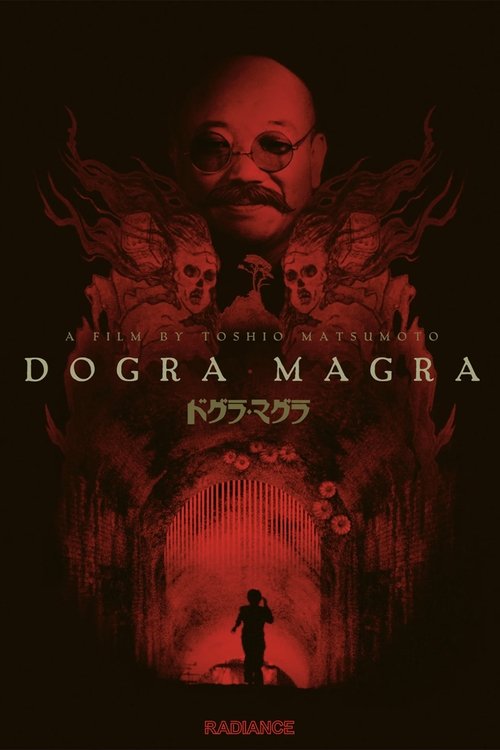
Dogra Magra (1988)
There is an urban legend in Japan that the novel Dogra Magra can drive its reader insane.
The book was published in 1935 by Yumeno Kyusaku, a Zen priest, post office director, and former sub-lieutenant who took his pen name from his father's verdict on his early writing - roughly, "the work of a person who always dreams."
The novel ran over 700 pages, took ten years to write and ten years to plan, and was almost completely ignored on release. Yumeno died the following year.
The book disappeared for nearly three decades before the philosopher Shunsuke Tsurumi rediscovered it and compared its author to Kafka and Poe. It is now considered one of Japan's three "great strange books" - a category whose other members remain almost entirely untranslated, in part because translators have repeatedly given up.
Several filmmakers tried to adapt it before 1988. None could secure permission from Yumeno's family. Toshio Matsumoto was the first.
DOGRA MAGRA (1988) was Matsumoto's fourth and final feature, made nineteen years after his radical Funeral Parade of Roses - the film often cited as a direct influence on A Clockwork Orange.
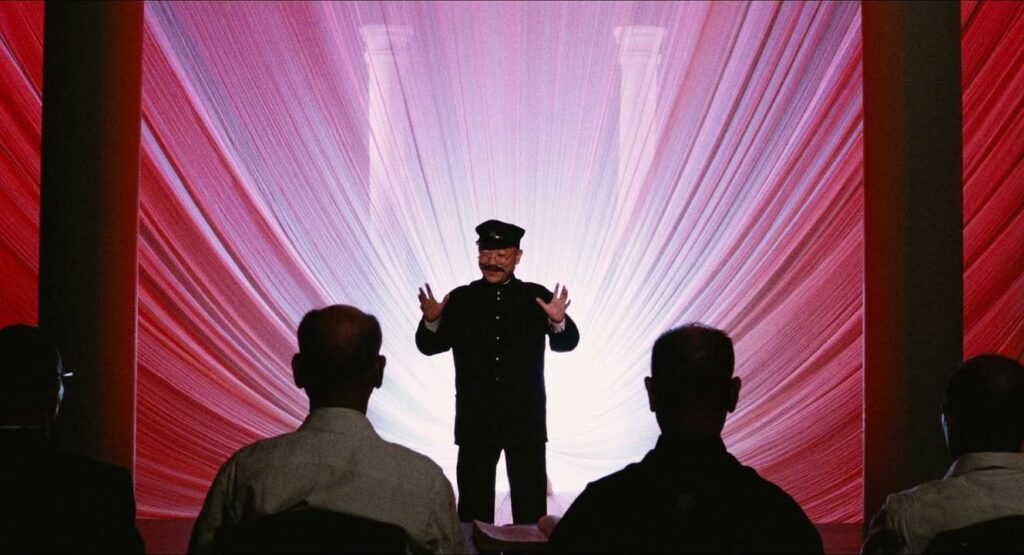
He had spent the intervening decades almost entirely in experimental video and short-form work, and that sensibility carries directly into the film: kabuki puppets, a talking photograph, mock-documentary inserts, and a structural willingness to loop back on itself that few features attempt and almost none survive.
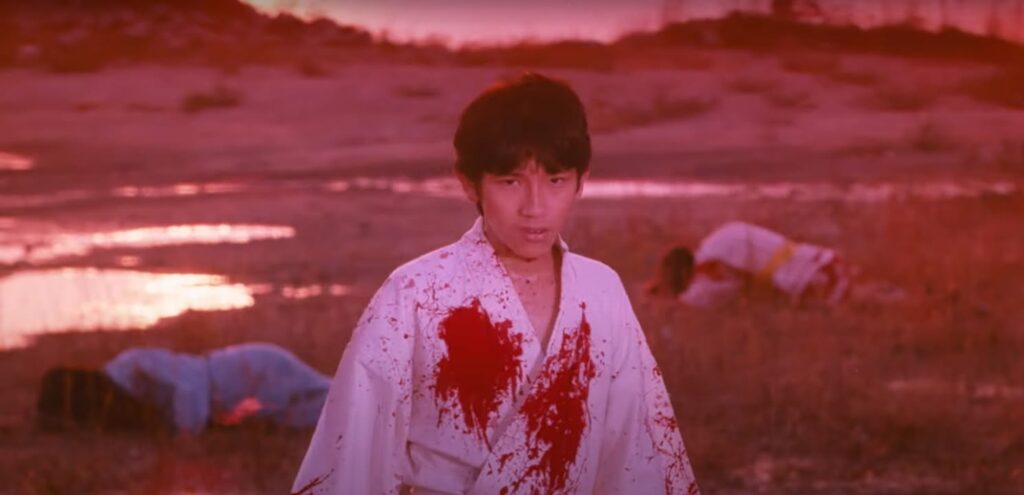
The plot, to the extent the film has one, concerns a young man who wakes in a 1920s psychiatric ward with no memory of who he is. Two doctors - one of whom may be dead - work to restore his recollection of having killed his bride on their wedding day.
There is a manuscript, also called Dogra Magra, written by a former patient. The manuscript appears to describe the events of the film. Reality and recollection begin to interfere with each other. The film ends approximately where it began.
This kind of structure tends to fail on screen. Dogra Magra mostly does not. What survives the translation from page to film is the book's quality of being trapped - inside a room, inside a body, inside a memory that may belong to someone else.
Cinematographer Tatsuo Suzuki, who shot Matsumoto's earlier Pastoral: To Die in the Country, builds a hospital interior so sealed and amber-lit that the rare cuts to exteriors land like physical shocks.
The film was almost impossible to see outside Japan for thirty-six years.
About the film
- Directed by
- Toshio Matsumoto
- Runtime
- 109 minutes
- Released
- October 15, 1988
- Country
- Japan
- Starring
- Yoji Matsuda, Shijaku Katsura, Hideo Murota, Eri Misawa, Leo Morimoto
More credits
- Genres
- Horror, Mystery, Fantasy
- Language
- Japanese
- Studios
- Katsujindo Cinema, Toshykanky Kaihatsu AG
- Written by
- Toshio Matsumoto, Kyūsaku Yumeno, Atsushi Yamatoya
- Also starring
- Jun Haichi, Kaori Kobayashi, Harukazu Kitami, Imari Tsuji, Toto Kitamura
Where to watch


With ads


Source: JustWatch
