
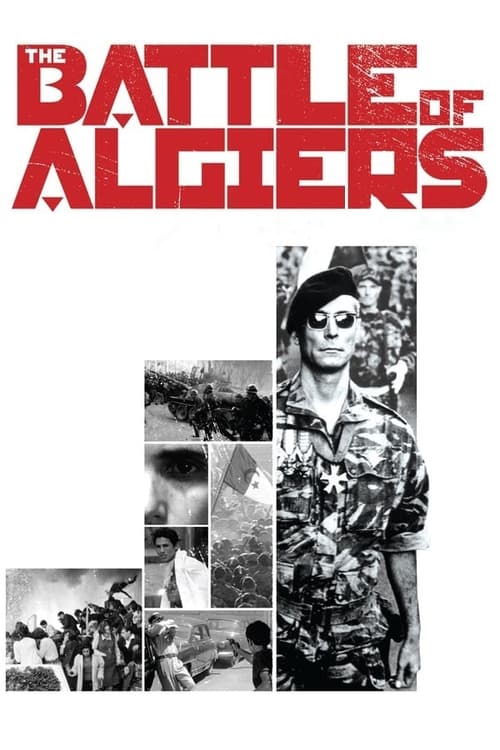
About the film
- Released
- September 8, 1966
- US theatrical
- October 7, 2016
- Certification
- NR
- Country
- Italy, Algeria
- Starring
- Brahim Hadjadj, Jean Martin, Yacef Saâdi, Samia Kerbash, Ugo Paletti
More credits
- Language
- Arabic, English, French
- Origin
- IT
- Studios
- Igor Film, Casbah Film
- Written by
- Franco Solinas, Gillo Pontecorvo
- Produced by
- Fred Baker, Yacef Saâdi, Antonio Musu
- Cinematography
- Marcello Gatti
- Music
- Gillo Pontecorvo, Ennio Morricone
- Also starring
- Fouzia El Kader, Mohamed Ben Kassen, Si Mohamed Baghdadi, Franco Moruzzi, Tomasso Neri
- Budget
- $800,000
- Box office
- $964,028
The man who produced the film had actually led the National Liberation Front's operations in the Casbah during the war the story depicts. He wrote his account of it from a French prison cell, and when the book became a film he took on the role of El-hadi Jaffar, a character drawn from his own experience.
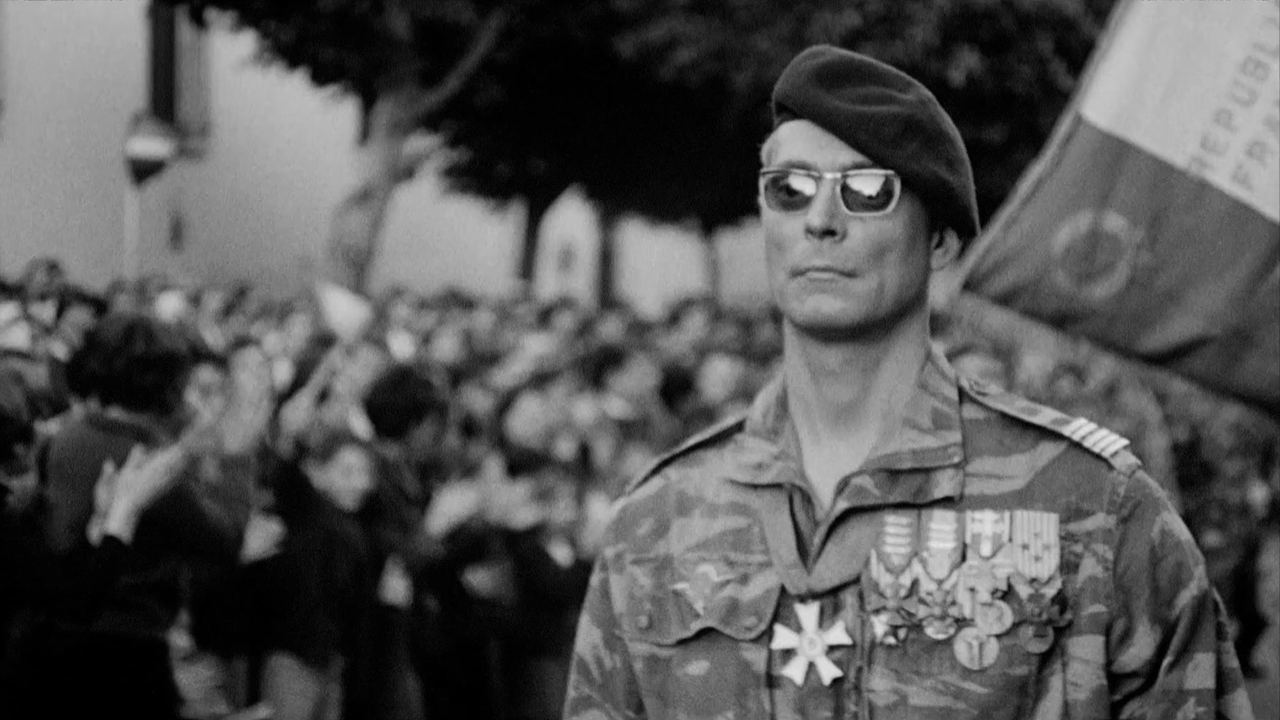
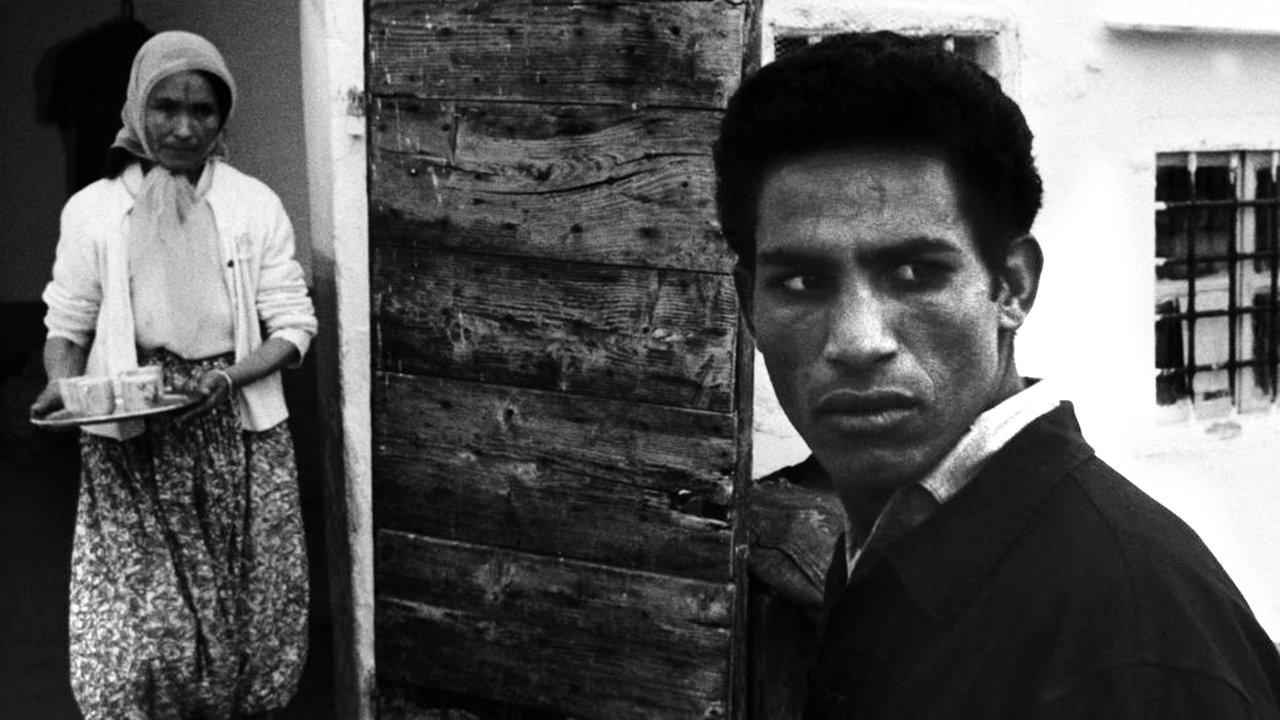
THE BATTLE OF ALGIERS (1966) follows Ali la Pointe, a former street criminal turned insurgent leader, as he organizes bombings and ambushes against French rule in Algeria. Brahim Hadjadj, who had never acted, plays la Pointe; Gillo Pontecorvo found him at a market in Algiers. Colonel Philippe Mathieu, played by Jean Martin, arrives with paratroopers and a doctrine of interrogation and torture meant to break the resistance cell by cell.
Martin was the only professional actor in the film. He had originated the role of Lucky in Beckett’s Waiting for Godot and served in a paratroop regiment during the Indochina War, which gives his performance as a French paratroop commander an autobiographical edge.
Pontecorvo directed from a screenplay by Franco Solinas, shooting on location with non-professional Algerian actors drawn from the community. Marcello Gatti’s black and white cinematography mimics newsreel footage so closely that American distributors felt compelled to add a disclaimer stating that no documentary material had been used. Ennio Morricone co-wrote the score with Pontecorvo.
Banned in France for years after its release, the film has since been studied by military strategists and revolutionaries for its unflinching depiction of urban guerrilla warfare and colonial brutality on both sides. It remains one of the most influential political films ever made, a work that refuses to let either side claim clean hands.
Sources
- La bataille d'Alger [videorecording] = The battle of Algiers / un film de Gillo Pontecorvo ; scénario de Franco Solinas www.si.edu
- An Interview with Saadi Yacef scholar.google.de
- Film Forum · THE BATTLE OF ALGIERS with producer/star Saadi Yacef in person filmforum.org
- Yacef Saadi, un symbole de la Bataille d'Alger et 1er producteur de cinéma - Embaixada da Argélia em Lisboa www.emb-argelia.pt
- AN INTERVIEW WITH SAADI YACEF - Your download is now in progress and you may close this window www.tandfonline.com
- The battle of Algiers buncombe.nccardinal.org
- MELVIN J. ZAHNOW LIBRARY / Videos - | Title | La Bataille d'Alger = The Battle of Algiers / un film de Gillo Pontecorvo library.svsu.edu
- « La Bataille d'Alger » : différence entre les versions — Wikipédia - Dans le même temps, [[Yacef Saadi]], un des chefs fr.wikipedia.org
- Alameda County Library / Castro Val - My Library alam1.aclibrary.org
- A war film with striking relevance - A war film with striking relevance www.latimes.com
- Biography Matching "shadow of a doubt" (Sorted by Popularity Ascending) - The success of "The Battle of Algiers" is glob www.imdb.com
- A NOUS LES ÉCRANS Succès du making of de La Bataille d’Alger www.lesoirdalgerie.com
- Brahim Hadjadj watch.plex.tv
- Brahim Hadjadj — Grokipedia - ''Brahim Hadjadj'' is an Algerian actor known for his iconic performance as Ali La Pointe grokipedia.com
- Brahim Hadjadj - Brahim Hadjadj us.amazon.com
- Pray For Hollywood - Pray For Hollywood www.movieguide.org
- Brahim Hadjadj Movies, Biography, Credits & Career Highlights | xXtra Butta www.xxtrabutta.com
- Brahim Hadjadj • FlixPatrol - (Source: TMDB) flixpatrol.com
- Jean Martin | Biography, Movie Highlights and Photos | AllMovie www.allmovie.com
- Author Search Results katalog.ulb.hhu.de
- Author Search Results :: Library search librarysearch.aut.ac.nz
- Jean Martin tv.apple.com
- Jean Martin: Difference between revisions - Wikipedia - Jean Martin: Difference between revisions en.wikipedia.org
- ジャン・マルタン tv.apple.com


Where to see
Streaming
United States


Free

With Ads


Also available internationally


Stream
Rent

Buy
Stream
Stream
Source: JustWatch
Physical media
More editions
Movies they don’t want you to see
Related movies only streaming in other territories
Featured movies
 Marketa Lazarová (1967)
 Eyes Without a Face (1960)
 Ballad of a Soldier (1959)
 A Midnight Clear (1992)
 At the Meeting with Joyous Death (1973)
 The Return (2024)
Films scored for your taste

One of the greatest movies ever made anywhere in the world.
Powerful film. Gut wrenching in a lot of ways.
A true masterpiece
Breathtaking film!
Bob knows a good flick.
Has not aged a day
Magnífic film
Gabriel Dandrea above said it for me. One of the greatest movies ever made. Full stop.