

Hard to Be a God (2014)
Saved on this device. to keep it.Your picks are saved on this device.
Rate 3 films and your recommendations are ready.
Where to watch
United States


Free
Stream

Source: JustWatch
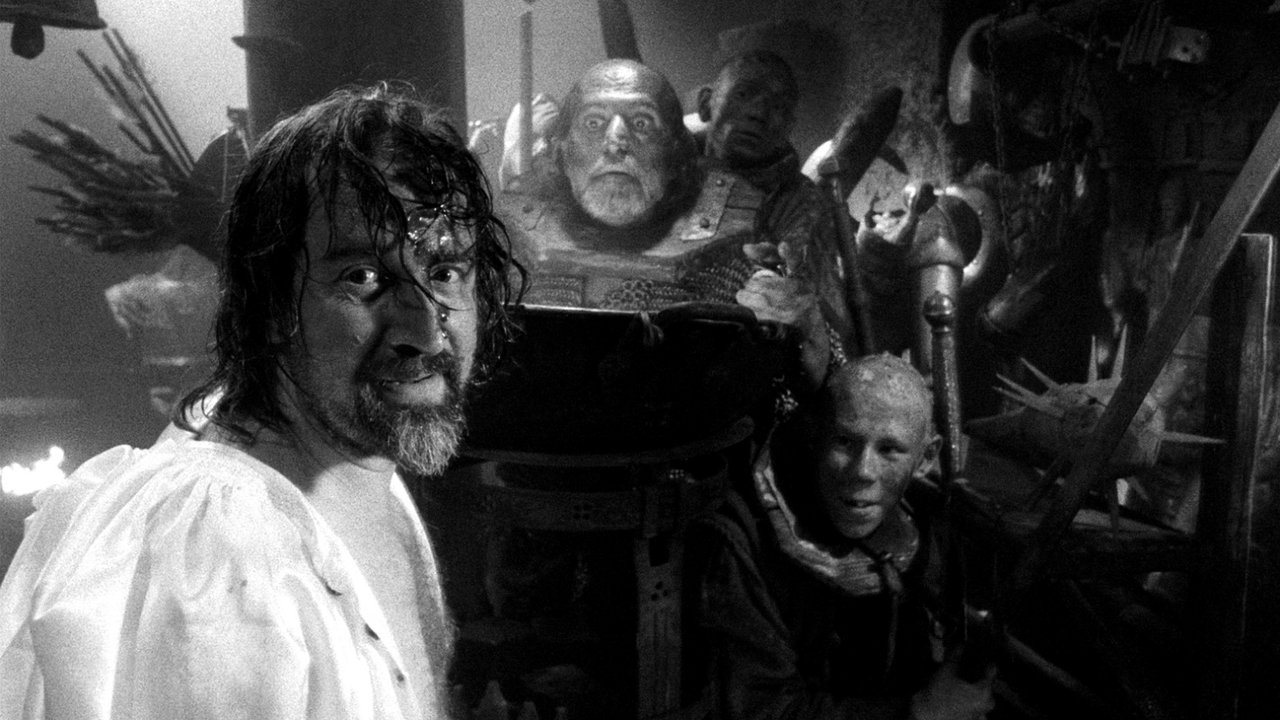
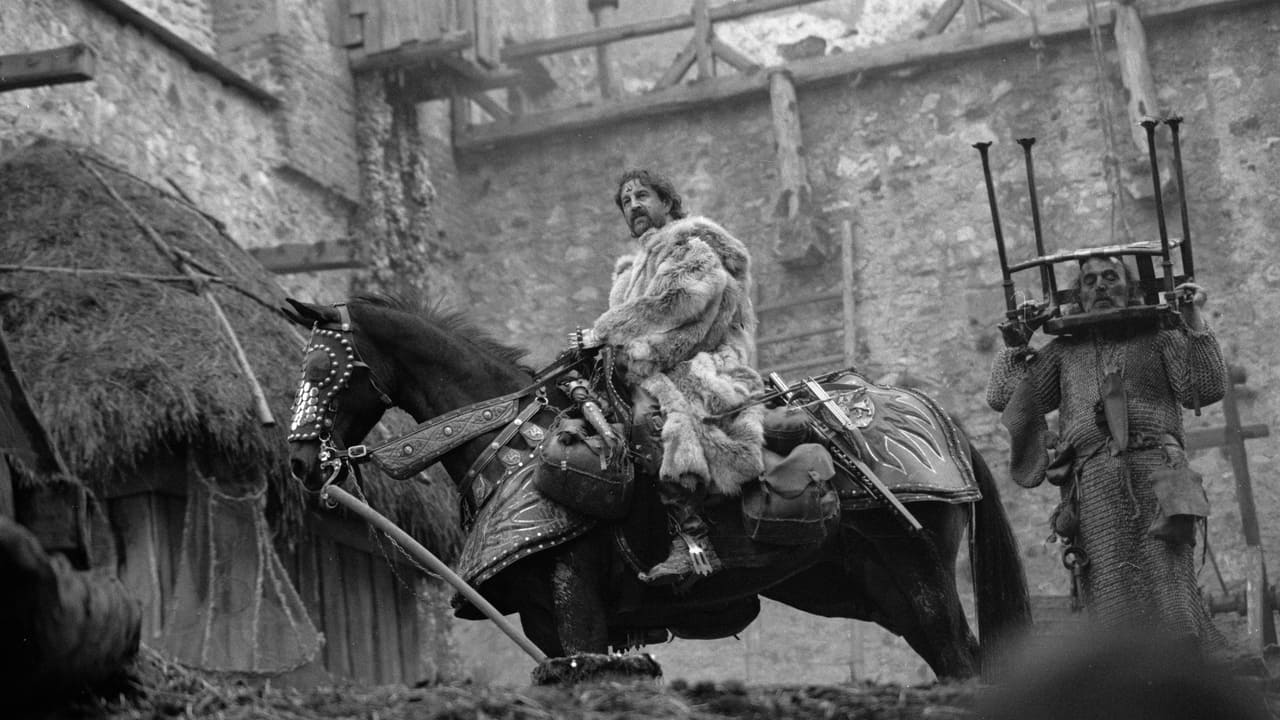
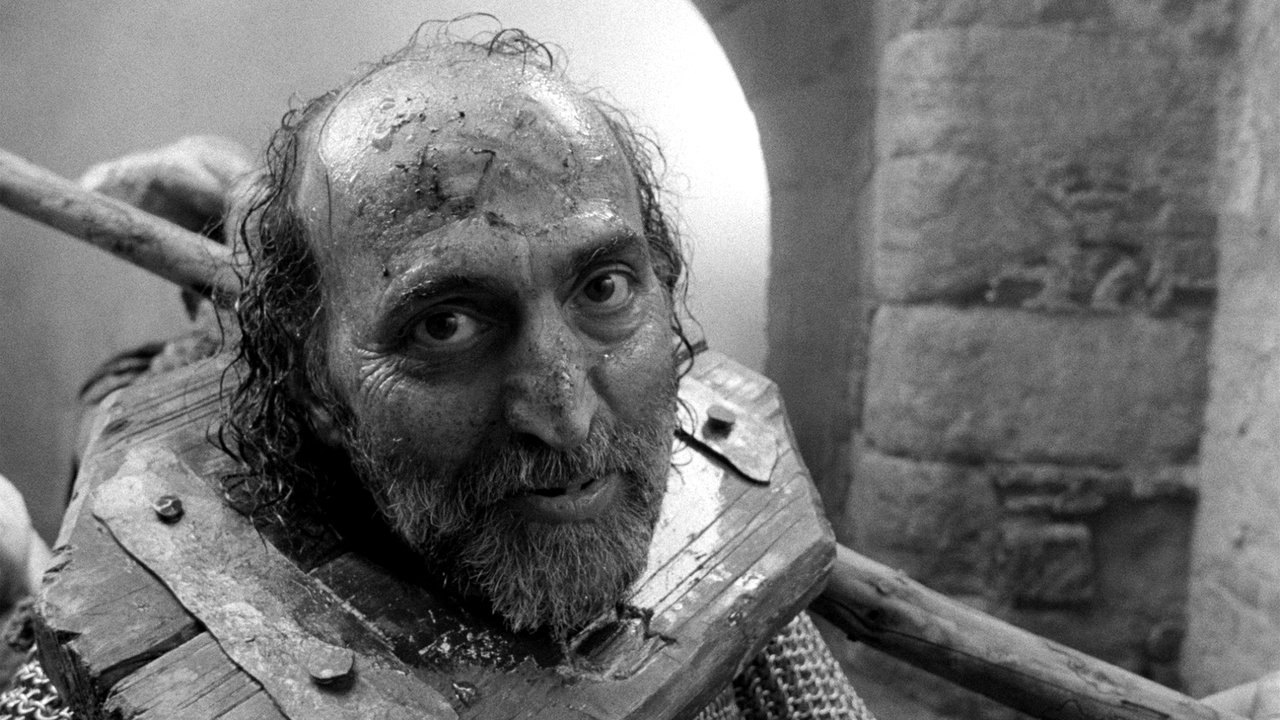
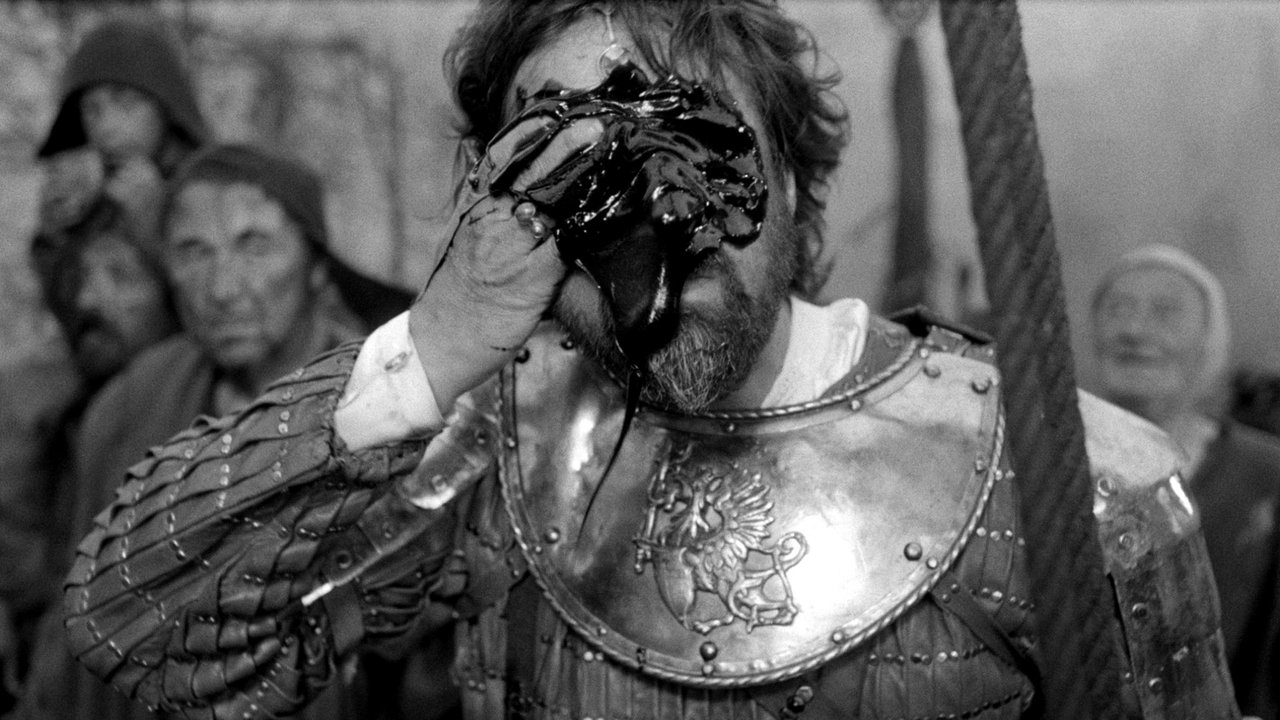
A planet where the Renaissance never happened, where every thinker gets strangled or drowned in a latrine. Filmed in mud, rain, and entrails.
HARD TO BE A GOD (2013) is Aleksei German’s final film, released posthumously after his wife Svetlana Karmalita and son Aleksei German Jr. finished the post-production following his death. It follows Rumata, played by Leonid Yarmolnik, a scientist from Earth sent to observe a planet stuck in a medieval dark age, forbidden to interfere even as the local rulers hunt down anyone who shows signs of intelligence or art.
Adapted from the novel by Arkady and Boris Strugatsky, the film abandons anything resembling conventional science fiction imagery. There are no spaceships or gleaming technology, only three hours of filth, phlegm, and feudal cruelty shot in black and white, the camera weaving through crowds who stare directly into the lens as if daring the viewer to look away.
German first tried to make it in 1968, but the crackdown on the Prague Spring made a story about a regime crushing its intellectuals impossible. By the time he returned to it in the late 1980s, another director had already adapted the novel. Shooting finally began in 2000 and continued for six years, with post-production stretching years beyond that.
Physical media
About the film
- Directed by
- Aleksei German
- Runtime
- 177 minutes
- Released
- February 27, 2014
- US theatrical
- June 30, 2015
- Certification
- NR
- Country
- Russia
- Starring
- Leonid Yarmolnik, Yuriy Tsurilo, Natalya Moteva, Aleksandr Chutko, Evgeniy Gerchakov
More credits
- Genres
- Drama, Science Fiction
- Language
- Russian
- Origin
- RU
- Studios
- Sever Studio, Russia 1, Lenfilm
- Written by
- Arkadiy Strugatskiy, Boris Strugatskiy, Svetlana Karmalita, Aleksei German
- Produced by
- Rushan Nasibulin, Viktor Izvekov, Leonid Yarmolnik
- Cinematography
- Yury Klimenko, Vladimir Ilin
- Music
- Viktor Lebedev
- Also starring
- Pyotr Merkuryev, Juris Lauciņš, Vytautas Paukste, Konstantin Vorobyov, Aleksandr Cherednik
- Budget
- $7,000,000
- Box office
- $1,310,673
 This product uses the TMDB API but is not endorsed or certified by TMDB.
More like this
 Stalker (1979)
 I Origins (2014)
 Escape from Tomorrow (2013)
 Another Earth (2011)
 Never Let Me Go (2010)
 Starfish (2019)
Films scored for your taste
its a remarkable film, although a tough slog through mud sweat shit piss rain puke and blood
Harry Ramone The deep black and white hues just make it all the more ambiguous.
Imagine working so hard to make an unwatchable barf fest of just the grossest nastiest shit with this beautiful photography…like Tarkovsky but with people swallowing snot and caking themselves in shit for three hours:p
Hard To Watch The Film more like. I TRIED but I’m a wimp.
Needs to be seen at the cinema
Serbia incarnate.
perfect double feature w/ on the silver globe
That was a hard watch
I love that it depicts those times as they probably were…too many movies sanitize that period. Like, c’mon. People barely had teeth, let alone shiny, white, even ones. This movie takes all of that apart.
Lisa McNamara The Middle Ages were actually a lot cleaner than people think. It didn’t all look like the world of Dennis the Constitutional Peasant.
N.p. Niemeier you think? I’m legit curious to learn more about that. I always imagine it was just…really difficult to live back then.
Lisa McNamara Fake History Hunter has posted a lot on this recently. And medieval folks definitely bathed. Public baths were available in many cities.
TIL! Thank you!
Lisa McNamara no sugar meant teeth were usually pretty good and they loved colour. Not the miserable mess Hollywood thinks.
Craig Mason Thanks!
amazing film!!!
That movie sucked.
Brilliant movie. I just wish I had seen it sooner.
I recommend reading the book.
Chris DiBella Please, what is the name of the book?
Silva Jardim Cipriano Algor same
I’ve seen it and cannot say that it is an enjoyable watch. Frankly I needed Ghibli therapy afterwards.
I needed a shower after watching half of this movie.
I didn’t finish watching it.
Very much a slog of a film to get through. I’m glad I’ve seen it. I’ll probably never watch it again.
It’s absolutely unwatchable, the photography is great, it makes the Safdie bros films look like cuddly classic Disney films.
masterpiece
I bet it’s way better if you are stoned watching this
Crap film, didn’t do the book justice
Excellent movie, but if I haven’t had read the book prior, I doubt I would have understood much of it.
Paul Mitache yeah, this movie is somewhat incoherent at times.
I’ve yet to read the book but I’ve seen the movie twice. The first time I watched it I was in an absolute confused state… but I still loved it. On a second watch a bit more nuance was glanced.
Bo Hernö I guess the intention of the director was to immerse the viewer as much as possible in that universe, and to be honest, it’s the closest to a tactile experience you’ll have from watching a movie. He did a really good job there, so I think it can be forgiven that the story took a bit of a dive.
Paul Mitache It’s for sure the smelliest movie I’ve ever seen.
Bo Hernö twice! You’re in a rare fraternity, my friend : )
Charley Hale Got it on bluray, there is bound to be a third time and perhaps a fourth 😉 I’ve gotten the book recently so I’ll probably watch the film again after reading it.
Paul Mitache in being almost exclusively preoccupied with the medieval misery I think it loses quite a bit of the thrust of the book tbh. A decidedly unique film though and definitely seems like the cast lived the roles, with all the horrible connotations that entails!
Paul Mitache the book is amazing. All the books I have read by the Strugatskys are fantastic though.
Markus Narodnik yeah, they are !
Paul Mitache I think it functions on the assumption that the viewer has already read the book.
…LONG LIVE THE HOLY INQUISITION AND ITS SPONSORED BARBECUE EVENTS…
That looks amazing.
A great film
Jem Milam Andra Matei might be an interesting one
I saw it on Kanopy, love this film!
The renaissance was made up by petrarch to sell sonnets
If the premise interests you, the novel is very good. Strugatski bros are most famous for Roadside Picnic (a.k.a. Stalker), but this one rocks, too.
Terrible movie. Beautiful shots taken separately as photography but raving mad script.
The Renaissance never happened in eastern Europe, Russia, or the middle east. In fact it never happened in Asia or Africa or the Americas … because it was a historical phenomenon unique to Western Europe, born out of the specific historical factors of that region alone. However its consequences would eventually be spread around the planet thanks to colonialism.
Vee Noc That’s been the stock western European narrative, since before Columbus.
Imagine the shock of Magellan’s men when they landed in the Islamic Sultanates of the Philippines after barely surviving crossing the Pacific Ocean.
The Islamicate world is the source of the Classical Wisdom that sparked the Renaissance.
Classics coming to the Catholic Medieval West through either the Venetian trade system with the Islamicised Roman Empire 3.0 (Ottomans),
or the sophisticated Islamic universities in southern Iberia.
Never watched anything like this film! Worth a look, but it’s not for everyone.
Wonderful movie and wonderful book.
Thematically similar to the classic Doctor Who episode State of Decay
The last good thing to come from Russia
Ironically, the Middle Ages were probably more stable because religious and social institutions were unassailable. In the West, virtually no one questioned the Catholic Church or the Feudal System. The Renaissance lead to religious wars, persecutions and witch hunts. Small city states constantly fought each other in bloody battles to gain small economic advantage. The opening of less restricted commerce and travel led to widespread pestilence. For the average person living through it, the Renaissance was probably filled with much more grief than the “good old” Medieval days
Hard To Watch This Movie. Great fun though.
Started it three times.
Masterpiece
Think there’s a watchable version on You Tube
It could be shot live in the red states in the US as a contemporary documentary.
Austin Evans
There’s a great line near the end where (I’m paraphrasing) someone says “when the grays comes, the blacks always follow.” (Referring to the color of clothing people wore). This suggested if you allow bad (grays) to prosper, it only gets worse. Wonderful film for those that have the patience.
‘Khrustalyov, My Car!’ is also excellent.
https://www.youtube.com/watch?v=ROp-acXByBM
I got to watch this in the theatre and that kind of screening really amplified the filth, it was awesome
Saw it in the cinema; found it utterly tedious. But on the strength of the comments here, I obviously need to try again.
Absolute total helluva thing. The production values are beyond belief. I loved how seemingly every interior scene between characters was “plagued” with crazy inexplicable crap hanging down in-between them, just totally nuts. It’s a freakish keeper without a doubt.
You said the magic words “Strugatsky brothers” …
Kind of historically illiterate, though. The premise of the film owes very much to a false and somewhat cranck-y 19th C. anti-Christian notion that Catholicism, feudalism, or the common zeitgeist of the European Middle Ages were somehow anti-intellectual. This was not the case. A concept of knowledge, technological progress, and art being inherently “good” was articulated by European scholars as early as the 13th C; and arguably it never “left” the European mind from Classical antiquity throughout the Dark Ages, since the Catholic church never rejected Aristotelianism, unlike Islam. What spurred on the Renaissance were primarily material factors, like the rise of Capitalism, rather than a change in mindset towards art and science writ large.
This stupid notion of a wantonly ignorant middle ages gained more traction in Communist Eastern Europe (no prizes for intuiting why) than it ever had in the mid-to-late 19th C.
Gordon Comstock You can get away with a lot when you call it another planet.
Gordon Comstock it’s Planet Russia, basically.
https://www.videobuster.de/trailer/5671/es-ist-nicht-leicht-ein-gott-zu-sein-trailer
There is also a German version from 1989 by Peter Flesichmann.
It really helps to have read the book first. I think it made me appreciate the movie that much more.
Very powerful. English version has subtitles while the original Russian does not, which makes it impossible to follow the plot as the sound is deliberately poor.
An endurance test that rewards those who take it.